


   |
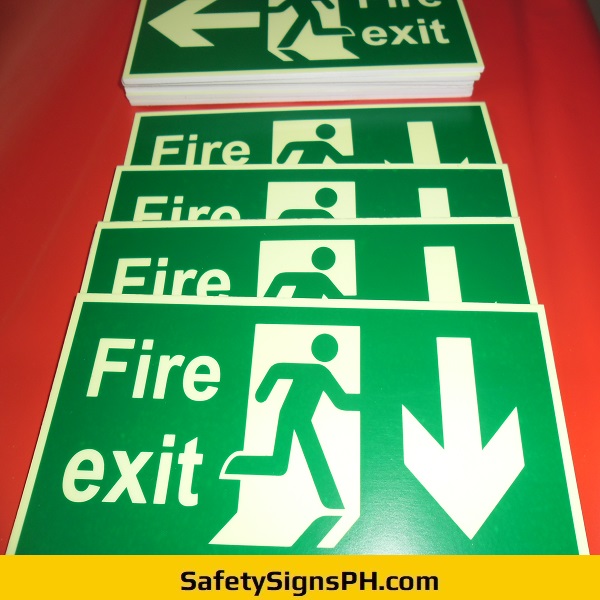
| In the bustling urban landscape of the Philippines—where malls, office towers, hotels, and factories coexist in close quarters—fire safety is not a luxury but a legal and moral imperative. Central to any effective fire‑prevention strategy is the presence of clear, standardized fire‑exit signage. Governed primarily by the Fire Code of the Philippines (P.D. 1566) and reinforced by the National Building Code (PD 1096), these signs serve as visual be‑acons that guide occupants to safety amid the chaos of a fire, smoke, or other emergencies. Their significance stretches beyond mere compliance; they are a critical component of the “human factor” in emergency response, influencing how quickly people can evacuate, how orderly the evacuation proceeds, and ultimately, how many lives are saved. Legal Framework and Design Standards Under Section 27 of P.D. 1566, every public building must display “directional signs indicating exit routes, emergency exits, and evacuation points.” The Bureau of Fire Protection (BFP) further prescribes specifications: the sign must be retro‑reflective, illuminated or self‑luminous, and positioned at a minimum height of 2 meters above floor level. The color palette is non‑negotiable—green background with white pictograms for “exit” and red background with white pictograms for “fire‑fighting equipment.” Moreover, the sign’s pictogram must be at least 300 mm in height, ensuring visibility even through smoke. These technical details are not arbitrary; they align with international standards such as ISO 7010 and NFPA 101, which research shows reduce evacuation time by up to 35 percent when properly applied. Psychological and Practical Benefits During a fire, panic can cripple rational decision‑making. A universally recognized exit sign cuts through that panic by providing an instant, non‑verbal cue that the way out is safe and sanctioned. Studies conducted in Manila’s high‑rise complexes reveal that 70 percent of occupants rely first on visual cues rather than verbal instructions when a fire alarm sounds. The green “exit” sign, coupled with arrows pointing toward the nearest stairwell, creates a mental map that remains functional even when auditory alerts are muffled by noise or structural damage. By reducing hesitation, these signs directly lower the risk of crowding, trampling, and the “bottleneck” effect that often leads to higher casualty rates. Compliance Challenges and Local Realities Despite clear regulations, many establishments—particularly older structures and informal commercial spaces—still lack adequate signage. A 2023 BFP audit of 1,200 retail outlets in Metro Manila found that 28 percent possessed either missing or non‑compliant fire‑exit signs. Contributing factors include cost constraints, insufficient awareness, and the rapid pace of urban redevelopment that outstrips regulatory enforcement. Additionally, the Philippines’ tropical climate can degrade sign materials; without periodic maintenance, retro‑reflective surfaces lose their effectiveness, especially during the rainy season when visibility is already compromised. Moving Forward: Best PracticesPeriodic Inspection: Building owners should schedule bi‑annual checks to verify sign integrity, illumination, and correct placement. Integrated Training: Evacuation drills must incorporate “follow the signs” as a core instruction, reinforcing the visual cue with muscle memory. Localized Design Adaptations: In areas prone to power outages, self‑luminous photoluminescent signs provide a reliable alternative to electric lighting. Collaboration with BFP: Engaging fire inspectors early during construction or renovation ensures that signage complies with the latest code amendments, avoiding costly retrofits later. The Bottom Line Fire‑exit signage in the Philippines is far more than a decorative requirement; it is a life‑saving instrument shaped by law, design science, and human psychology. When installed correctly, maintained regularly, and reinforced through regular training, these signs transform chaotic emergencies into orderly evacuations. As the nation continues to grow vertically and densify its built environment, the commitment to robust fire‑exit signage will remain a cornerstone of public safety—protecting not just property, but the very people who inhabit these spaces every day. Searching for cost-effective exit signages in the Philippines? Don't hesitate to contact us to request a free, no-obligation quotation. Our company can produce various types of customized fire safety signs using a variety of materials. Related Product: 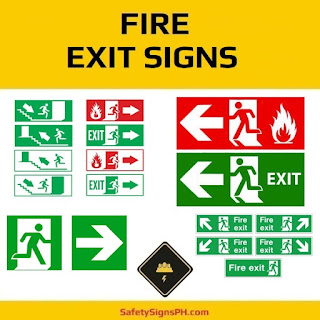  |
 |


No Comments yet. Add your Comments now!
Post a Comment