In the Philippines, emergency exit signage is more than a decorative detail—it is a legal requirement that can mean the difference between orderly evacuation and chaos during a fire or other emergency.
The Fire Code of the Philippines and the National Building Code both mandate that all public and commercial structures provide clear, durable, and easily recognizable exit signs. The Department of the Interior and Local Government (DILG) and the Bureau of Fire Protection (BFP) enforce these rules, while many developers also follow international guidelines such as ISO 7010, NFPA 101, and the British Standard BS 5499 to ensure consistency with global best practices.
1. Standard “Running‑Man” Exit Sign
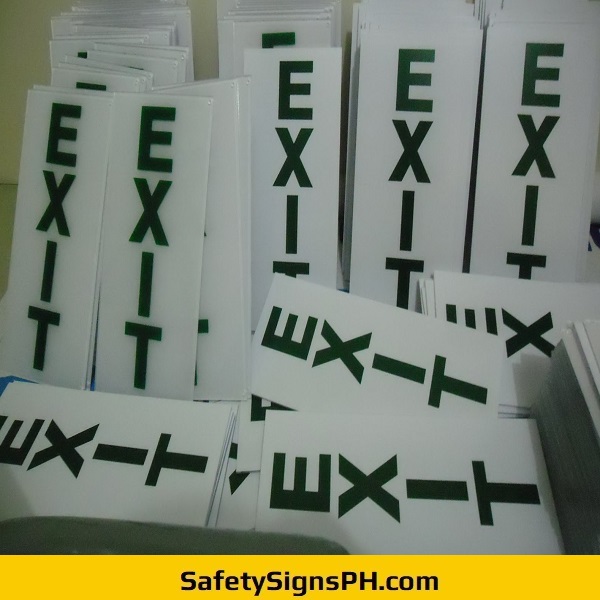
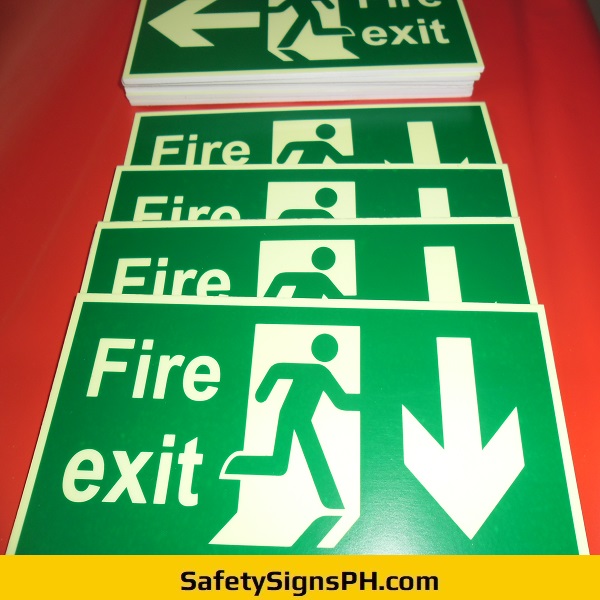
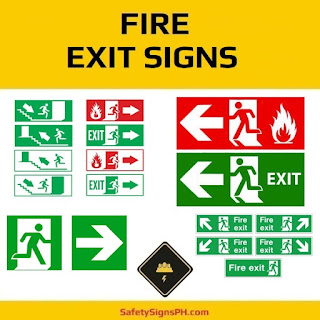
The most ubiquitous symbol is the white silhouette of a person walking toward a doorway, commonly called the “running‑man.” In the Philippines, fire exit sign is typically set on a green background with white pictogram and lettering (green‑and‑white is the preferred colour scheme for exit routes because it is universally associated with safety). The sign may read simply “EXIT” in capital letters beneath the pictogram, and it must be mounted at a height of 1.8–2.1 m from the floor, facing both directions when possible.
2. Illuminated (Electric‑Powered) Signs
For areas that are constantly lit, electrically illuminated signs are used. These consist of a translucent panel with an internal LED or fluorescent light source that keeps the symbol bright even when the main lighting fails. The BFP requires a minimum illumination of 50 lux for a clear line of sight from at least 5 m away. LED technology is now preferred because of its low power consumption and long lifespan.
3. Photoluminescent (Glow‑In‑The‑Dark) Signs
In locations where power may be cut during an emergency—such as stairwells, basements, or underground parking—photoluminescent safety signs are compulsory. The signs are made of a special material that absorbs ambient light and then re‑emits it for at least 30 minutes after darkness sets in, meeting the BFP’s requirement of a minimum 10 cd/m² brightness for the first 30 minutes of a power outage.
4. Directional Arrow Signs
While the running‑man sign indicates “there is an exit here,” directional arrow signs guide occupants along the safest route to that exit. These arrows are usually white on a green background and may include the word “EXIT” or the exit number (e.g., “EXIT 1”). They are placed at regular intervals—typically every 10 m—in corridors, at junctions, and at the entrance of stairwells.
5. Floor‑Level Exit Markings
In high‑traffic venues such as malls, airports, and hospitals, the floor itself often carries photoluminescent or reflective striping that points toward the nearest exit. The strips follow the same green‑and‑white colour palette and are mandated to be at least 150 mm wide so that they remain visible under low‑light conditions.
6. Special‑Purpose Signs
Certain environments—industrial plants, petrochemical facilities, or hospitals—require hazard‑specific exit signs. For example, a “NO SMOKING” pictogram may accompany the exit sign in flammable‑storage areas, while a “DO NOT USE ELEVATOR” notice is mandatory in multi‑storey hospitals to prevent people from attempting to evacuate via lifts during a fire.
Practical Implementation Tips
Uniformity: Use the same design and colour scheme throughout a building to avoid confusion.
Visibility: Ensure that signs are not obstructed by furniture, signage, or decorative elements.
Maintenance: Conduct a quarterly inspection to verify illumination levels, replace dead LEDs, and clean dust from photoluminescent surfaces.
Training: Include a brief walkthrough of the exit‑sign system in employee orientation and regular fire‑drill briefings.
By adhering to these sign types and the associated Philippine regulations, building owners not only comply with the law but also create a safer environment for occupants, staff, and visitors alike. Properly designed and maintained emergency‑exit symbols are the silent guardians that guide people to safety when every second counts.
Searching for a supplier of custom emergency exit signages in the Philippines? We've got your needs covered! Don't hesitate to contact us today to request a free, no-obligation quotation. |







No Comments yet. Add your Comments now!
Post a Comment